Menu

Call

Locations

Gallery

Pasadena

Newport Beach

Vincent C. Hung, MD, MOHS Surgery, Reconstructive Plastic Surgery, Cosmetic Surgery

Category: Mohs Surgery

- Schedule A Consultation

7 Ways to Minimize Mohs Surgery Scars

| The Office of Dr. Vincent Hung

Mohs surgery treats skin cancer by carefully removing the affected area and a thin rim of tissue around it. The procedure is designed to preserve as much healthy tissue as possible.

This approach requires less reconstruction than other types of skin cancer surgery.

However, the affected skin must often be remodeled, and a scar will form.

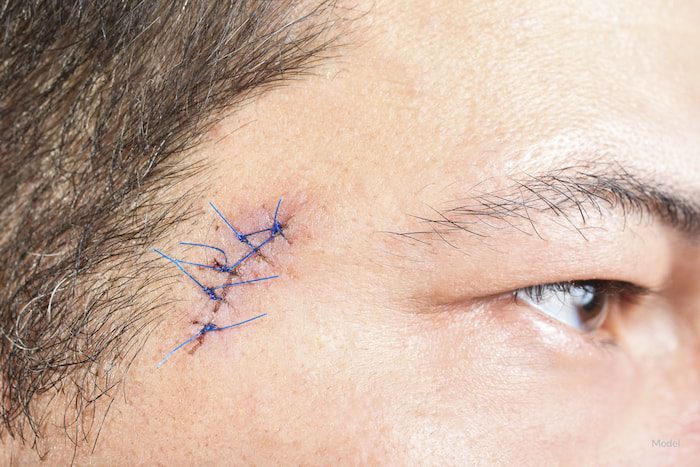
Mohs surgery scarring, Man with a healing incision after a skin cancer biopsy.

What Is Mohs Surgery?

Mohs surgery is a complex and highly effective skin cancer treatment that includes the following steps:

Diagnosis and Evaluation

The process begins with a comprehensive examination and biopsy to identify and confirm the presence of skin cancer. The dermatologist or surgeon evaluates the type, size, and location of the cancerous lesion.

Anesthesia and Preparation

The patient is usually administered local anesthesia to numb the area where the skin cancer is located. Once the area is numb, the surgery site is prepped for the procedure.

Tissue Removal and Analysis

The surgeon removes the visible tumor and a very thin layer of surrounding tissue. The excised tissue is mapped and divided into sections, then processed and examined under a microscope in an on-site lab.

The surgeon thoroughly examines these sections to determine the pathology of the tissue. This process allows the immediate and precise evaluation of margins to detect any remaining cancer cells.

Layer-by-Layer Removal and Preservation of Healthy Tissue

If cancer cells are detected in the margins, another layer of tissue is meticulously removed. This process continues until no cancer cells are observed under the microscope.

During Mohs surgery, the surgeon preserves as much healthy tissue as possible. This technique minimizes scarring and maximizes the removal of cancerous cells, ensuring the best possible cosmetic and functional outcome.

Closure of the Surgical Site and Reconstruction

Once the cancer is completely removed, the surgeon determines the best option to close the wound, whether through direct closure, a skin graft, or allowing it to heal naturally.

Skin or cartilage grafts are used to reconstruct the areas affected by skin cancer and its removal, whether the growth was on the face, ears, arms, back, or legs.

This type of graft will depend on the area of skin cancer and how much skin needs to be removed to ensure that all of the cancer cells are eliminated.

Skin grafts are either full-thickness or split-thickness. While both techniques move the skin from a donor area (usually a place that is easy to conceal with clothing), they require a different amount of material.

  • A Full-thickness graft removes a full layer of epidermis and dermis from the donor region.
  • Split-thickness grafts require a complete layer of the epidermis but only a partial thickness of the dermis.

These donor samples are then processed and spread over the open wound.

Postoperative Care

Following the surgery, the patient is advised on wound care and provided with instructions for postoperative care. Proper care is essential for optimal healing and to reduce the risk of infection or complications.

What Kinds of Scars Develop?

Your Mohs surgery scar will depend on the size, location, and shape of the tumor, as well as the types of reconstruction techniques required.

In certain situations, when the cancer is small, the skin can be pulled together and sutured closed. This technique usually results in a minimal, linear scar that tends to fade nicely on its own but can still benefit from scar reduction techniques.

In other situations, when a skin or cartilage graft is required, the resulting scar may be round or rectangular and more visibly pronounced.

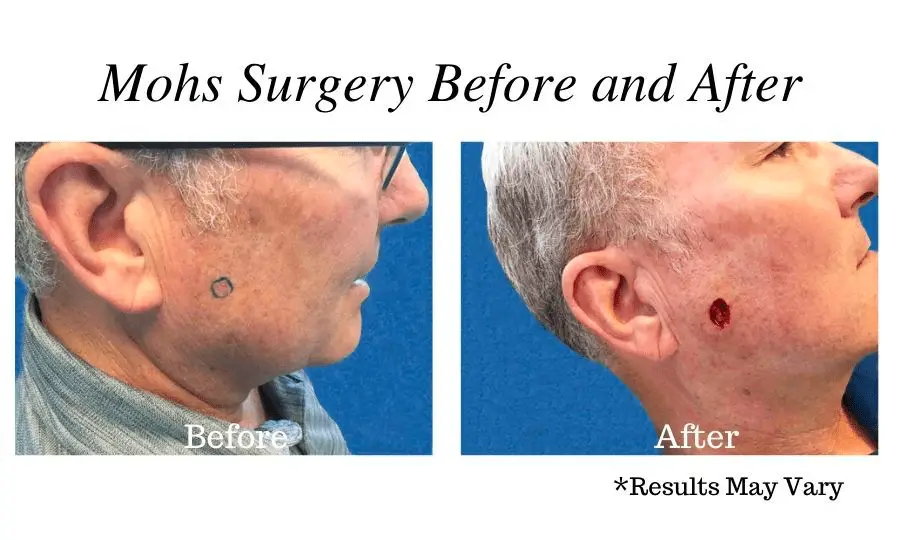
Before and after image showing the results of Mohs Surgery before the reconstruction process in Pasadena, CA.

How Can You Reduce the Appearance of Mohs Scars?

While scars are a natural part of the body’s healing process, these seven tips can help reduce their appearance and promote a smoother, more aesthetically pleasing outcome.

1. Follow All Postoperative Instructions

It’s essential to follow your surgeon’s post-surgical instructions carefully. Keep the surgical site clean and protected according to their directions and follow the recommended wound care routine to aid in proper healing.

2. Stay Out of the Sun

Skin grafts are more susceptible to sun damage than the surrounding skin and burn easily. This exposure also causes scars to take on a dark brown color.

To prevent your scar from darkening, protect the healing incision or graft by keeping it covered and out of the sun and using a high-SPF sunscreen when your doctor clears you to do so.

3. Use Moisturizers to Massage the Scar(s)

Post-surgical massages are performed to promote wound healing and reduce the appearance of scars. Massaging these scars breaks up scar tissue and can reduce the size and profile of the wound. By adding moisturizing lotions or oils, you can soften the scar tissue further and improve the appearance of healing skin, but be sure to consult your doctor before massaging the area and about the moisturizer you want to use.

When massaging, gently rub the scar and adjacent areas to soften the scar tissue, stimulate collagen production, and promote skin remodeling. Scar massage should be performed two or three times a day for five to ten minutes at a time,

4. Use Scar-Reducing Creams or Gels Containing Silicone

Dermatologists and plastic surgeons often recommend silicone-based gels, creams, or strips to minimize scarring.

  • Silicone strips are reusable bandages that should be worn 12 hours daily for at least three months.
  • Silicone creams and gels are applied directly to the scar to reduce the pigment.

These products should be applied to the healing wound according to the provider’s instructions and typically can be used once the incisions have completely healed.

5. Consider Laser Treatments

Some individuals opt for laser therapy or other non-invasive procedures to minimize the appearance of scars. These treatments can help flatten and fade scars to improve skin texture.

6. Maintain a Healthy Diet and Hydration

Eating a balanced diet rich in nutrients and staying hydrated can support the body’s natural healing process. Vitamins, minerals, and proper hydration are a vital part of optimal wound healing.

7. Consult a Dermatologist or Plastic Surgeon

If concerned about scarring, consult a dermatologist or plastic surgeon who specializes in scar revision. They can recommend additional treatments or techniques tailored to your individual needs.

Minimizing Mohs surgery scars involves a combination of proper wound care, protection from the sun, and, at times, additional treatments to maximize the skin’s ability to heal.

Give Your Scars Time to Fade

Scar healing is a gradual process. After doing all you can to minimize your scarring, be patient and allow sufficient time for the scar to mature. Initially, scars may appear red or raised but tend to improve and fade over time.

Find Out More About Mohs Scar Reduction in Pasadena, CA

To learn more about how to reduce scars or to find a surgeon who performs Mohs surgery near Pasadena or Los Angeles, California, call Dr. Vincent Hung at (626) 432-5032 or fill out our online contact form.


What Is a Split-Thickness Skin Graft?

, | The Office of Dr. Vincent Hung

3 Minute Read:

Skin grafts are used to cover and repair the wounds left by skin cancer treatment when the surrounding skin is not healthy enough to heal by traditional wound healing.

Women touching her smooth and healthy legs after skin cancer resconstruction.

Reconstruction of skin cancers can be difficult on the lower legs because of the tight skin, the presence of spider and varicose veins, and the necessity of that skin to stretch and expand when walking or exercising.

Since men and women often expose their lower legs, especially during the hot Southern California summers, reconstruction of skin cancers on the legs is essential.

How Do Skin Grafts Work?

A skin graft takes skin from a healthy area of the body and transfers it to a different area that cannot repair itself.

While skin grafts are almost always used after skin cancer surgery, such as Mohs surgery, it can also be used to treat burns, large wounds, and infections.

There are two types of skin grafts available to treat these injuries: full-thickness and split-thickness skin grafts.

Split-thickness skin grafts are commonly used to cover skin cancer wounds on the lower legs.

How Is a Split-thickness Skin Graft Performed?

The difference between a full-thickness skin graft and a split-thickness skin graft is the amount of skin taken from the donor site.

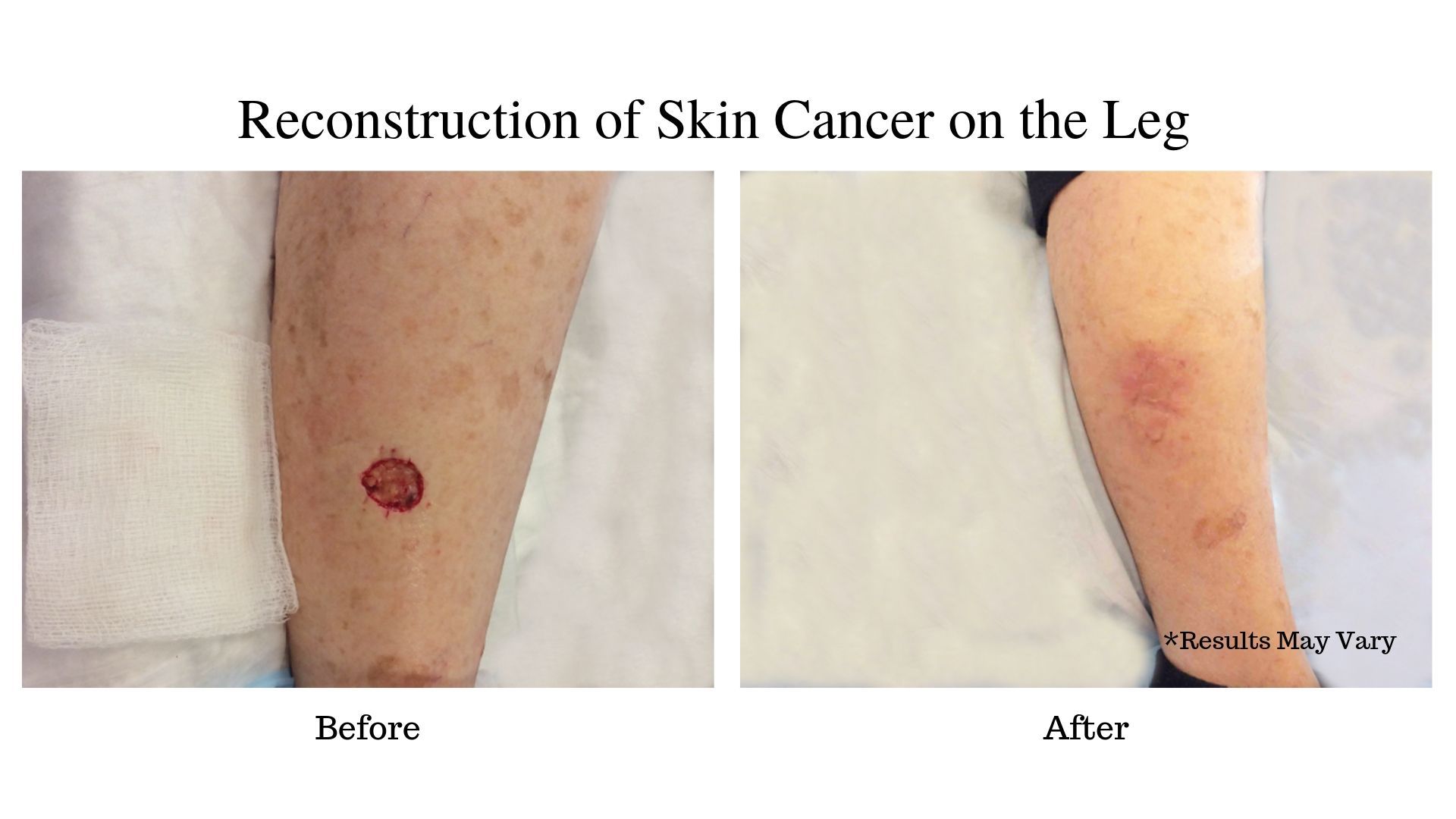
Before and after for a woman undergoing reconstruction of skin cancer on her leg in Pasadena, CA.

A split-thickness skin graft removes the epidermis (the top layer of the skin) and only a portion of the dermis (the deeper layer of the skin).

A full-thickness skin graft, on the other hand, removes the epidermis and the dermis.

The split-thickness technique is used to cover large areas, which makes it ideal for the legs.

Full-thickness skin grafts are usually reserved for smaller areas, such as the face and hands, because they blend better with the surrounding skin.

Full-thickness skin grafts also heal very well, but they are not able to cover the same amount of tissue space as a split-thickness graft.

Split-thickness Skin Graft Procedure Steps:

  1. The donor site is marked depending on the size and depth of the wound that the skin will be transferred to. While split-thickness skin grafts can be taken from any area of the body, the skin is commonly removed from the inner thigh, where the donor site is easy to cover.
  2. From the donor site, the epidermis and some of the dermis is gently and carefully removed. Some epithelial cells, like the sweat glands, hair follicles, and sebaceous glands, are left at the donor site so that they can assist in the reepithelialization (healing) of the donor site.
  3. This donor skin is transferred to a skin graft carrier so that it can be meshed. Meshing is a step of the grafting process that creates small slits in the donor skin so that it can stretch to cover a larger recipient area.
  4. The meshed donor skin is then prepped, sterilized, and applied to the wound. During the healing process, new skin cells will develop and fill in the “holes” created by the meshing process.
  5. Both the donor sites and the recipient sites are wrapped and dressed in sterile bandages and gauze.

For More Information

To learn more about skin grafts or reconstruction after skin cancer, contact Dr. Hung by calling (626) 432-5032 or by filling out our online contact form. Dr. Hung performs Mohs surgery and reconstruction after skin cancer treatment in Pasadena, California.

Is Nasal Reconstruction Different from Cosmetic Nasal Surgery?

, | The Office of Dr. Vincent Hung

3 Minute Read:

Although nasal reconstruction and nasal surgery sound like they are one and the same, they are vastly different procedures. Nasal reconstruction fills defects or holes created by skin cancer treatment, while rhinoplasty, or cosmetic nasal surgery, alters and enhances the physical appearance or function of the nose.

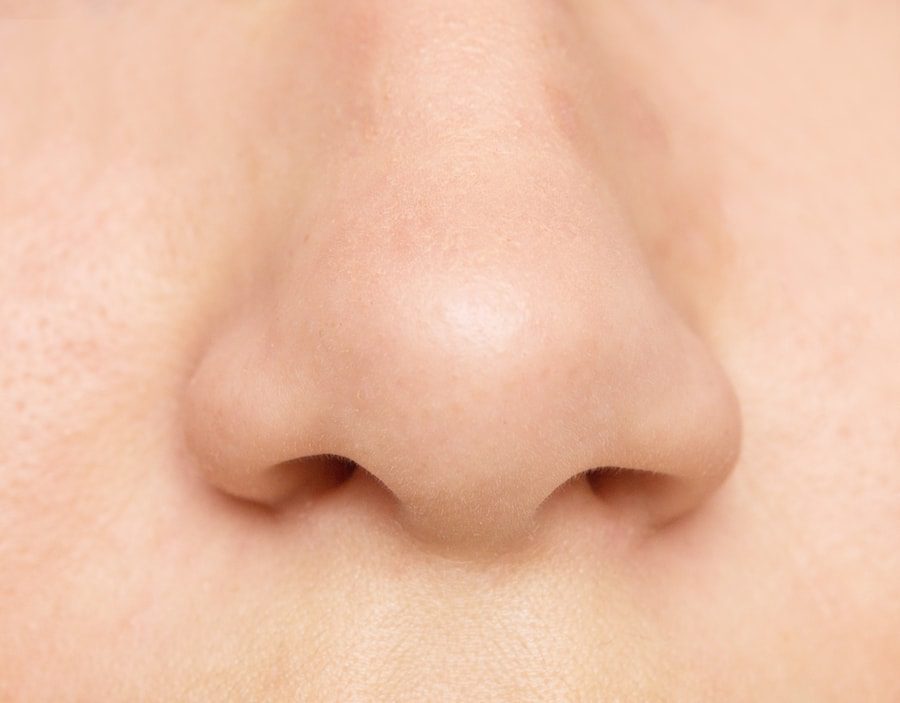
Close up image of a nose

Despite being so different, at their core, both procedures enhance nasal aesthetics. Nasal reconstruction does so by moving skin and tissue. Rhinoplasty does so by altering cartilage and bone.

Nasal surgery, whether reconstructive or cosmetic, is one of the most complex and challenging forms of facial surgery. The nose is a multifaceted structure composed of cartilage, muscle, mucosa, tissue, and skin and, as if that alone did not make it difficult enough, it is the central aesthetic focus of the face.

Any defect or cosmetic insecurity is heightened when it deals with the nose, and nasal surgery can be the most rewarding type of facial enhancement.

How Does Rhinoplasty Differ from Nasal Reconstruction?

Rhinoplasty involves the surgical reshaping and reconstruction of the bone and cartilage to improve nasal functionality and aesthetics. This procedure is performed to alter a nasal profile that may have large humps or bumps, structural irregularities of the nasal tip, flared nostrils, or is not in balance with the surrounding facial features.

Rhinoplasty is performed through an open or closed method; however, this only differentiates the locations of the incisions. Rhinoplasty, regardless of technique, is performed entirely on the inside of the nose. This surgery involves shaving down the cartilage to get rid of bumps or introducing cartilage or bone grafts to augment the size or shape.

Why Is Nasal Reconstruction Essential After Skin Cancer Treatment?

The nose is one of the most common locations for skin cancer on the face. While Mohs surgery is one of the best ways to ensure that the tumor will be entirely removed and will not return, it often leaves a hole or defect in the skin.

Reconstruction focuses on preserving the nasal lining, support, and coverage. This uses one of four reconstruction techniques. The chosen method will depend on the size of your defect as well as your nasal anatomy.

Direct Linear Closure

This reconstruction technique is the easiest and most common approach when repairing a defect after Mohs surgery. Here, the two sides of the wound are pulled together, and the skin is closed in a straight line. Since most skin cancers are removed in a circle with Mohs surgery, this technique often elongates the shape of the missing skin so that the surface will not pucker when it is pulled together.

Local Flaps

The local flap technique may be offered when the defect is small. This process covers the area of missing skin by stretching the surrounding skin to cover the hole. The local flap method is less invasive and requires less recovery than skin grafts because it does not take skin or tissue from a secondary region.

Full Thickness Skin Grafts

Whereas local flaps borrow tissue from the nose, skin grafts take tissue from elsewhere on the body. This technique is required when the defect is larger, and the skin on the nose cannot be stretched to cover the hole adequately. The skin used for this graft comes from various regions of the body, and that area will be determined during your consultation.

Paramedian Forehead Flap

This technique is often considered the gold standard for nasal reconstruction. The forehead offers a large amount of tissue that can be safely relocated to the nose. This technique is ideal when the nasal defect is too large even for a standard skin graft and can create some of the most natural-looking and inconspicuous reconstructive results.

If you are about to undergo Mohs surgery for skin cancer on the nose, it is time to consider your nasal reconstruction options. Contact Dr. Hung by calling his Pasadena office at (626) 432-5032, his Newport Beach office at (949) 574-8292, or by filling out his online contact form.


Should You Consider Reconstructive Plastic Surgery?

, | The Office of Dr. Vincent Hung

3 Minute Read: 

After undergoing Mohs surgery for your skin cancer, you may be left with a less-than-desirable cosmetic result. Although Mohs surgery has the unique ability to preserve more tissue than other skin cancer surgeries, skin and tissue are still being removed, and scars are not only likely but expected. During Mohs surgery, thin layers of skin and tissue are removed so that only the cancerous tissue is taken; saving a more significant amount of surrounding skin and tissue than other procedures. Unfortunately, some skin cancers are deep and extensive, and a considerable amount of tissue must be removed. While a scar is always better than the alternative of cancer, it can still be detrimental to your confidence and emotional well-being, especially if the skin cancer was on your face. For patients suffering from the emotional and psychological effects of scarring after Mohs surgery, reconstructive plastic surgery can help restore smoothness and an aesthetic appeal to many areas of the face and body.

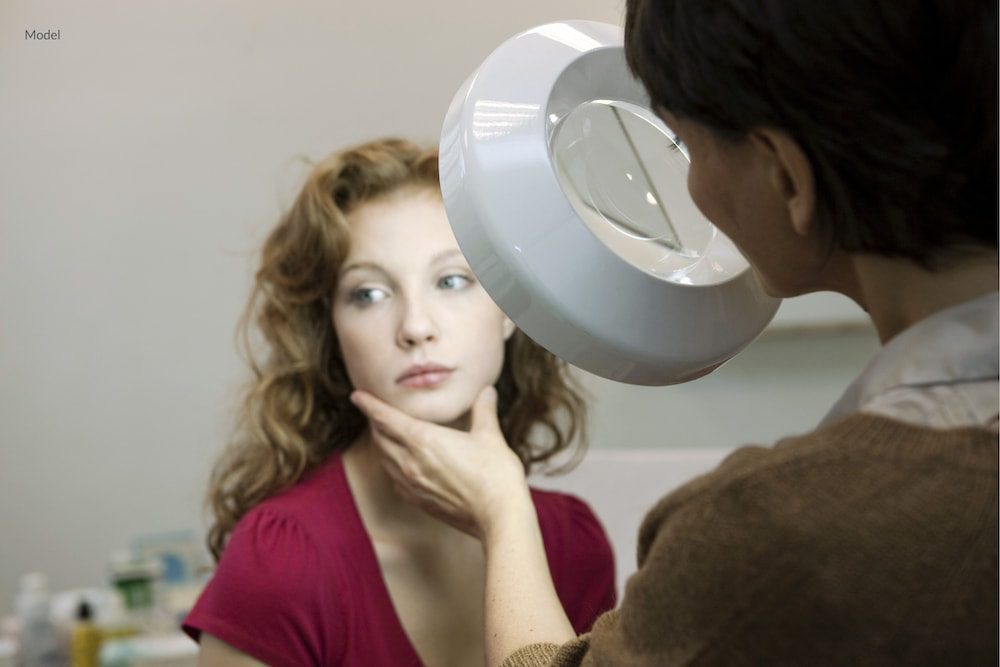
Woman getting her skin checked for skin cancer.

Although skin cancers can develop on nearly any area of the body, they are most commonly diagnosed on areas above the shoulders, especially on the face. Facial features, such as the nose, lower eyelids, lips, ears, and scalp, are common places for skin cancer to develop, and it is difficult to hide scarring in these areas. Instead of trying to find creative ways to cover the scars, reconstructive plastic surgery employs a series of techniques that minimize the after-effects of Mohs surgery and other skin cancer treatments.

The Physical Benefits

Skin cancer often develops in visible areas on the face, such as the nose, lips, and eyelids. While these features are always on display, their value is not only aesthetic; all of these areas play essential functional roles in your life that can be interfered with by the results of Mohs surgery. Scarring from previous skin cancer on the nose can affect your ability to breath while scarring on the eyelids can force the lower lids to become too taut, making it difficult for your eyelids to open and close. Scarring on the lips can impede your ability to speak or eat.

The Emotional Benefits

While we sometimes try to deny it, a considerable amount of our self-confidence is interconnected with the way we perceive our appearance. Having an extensive scar on your face can not only be difficult to hide, but it can be challenging to forget about. Even if others don’t realize that the scar is there, you are aware of it, and its presence can affect the way you carry yourself. Reconstructive plastic surgery after skin cancer allows you to put your insecurities about your scar behind you so that you can embrace your facial features. If you are considering reconstructive plastic surgery, you’ve already undergone the hardest parts: the diagnosis and treatment. Instead of seeing the constant reminder of your skin cancer when you look in the mirror, reconstructive plastic surgery allows you to put your cancer behind you.

To learn more about how reconstructive plastic surgery can be beneficial to you after skin cancer, contact Dr. Hung at his Pasadena office at (626) 432-5032 or his Newport Beach office at (949) 574-8292 to set up a consultation.


How Can Mohs Skin Cancer Surgery Help?

| The Office of Dr. Vincent Hung

While skin cancer is treatable and offers an excellent prognosis, the initial diagnosis is frightening as any cancer is still cancer. Specifically, there are three types of potential skin cancer: basal cell carcinoma, squamous cell carcinoma, and melanoma. And there are various ways to treat these forms of cancer. One of these is a highly specialized form of surgery known as Mohs surgery.

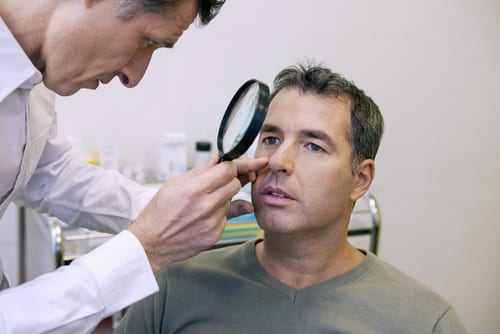
Dermatology Consultation Man-img-blo

How Does Mohs Surgery Differ From Traditional Methods?

The majority of skin cancer diagnoses require a surgical procedure to ensure that all traces of the cancer are removed. In traditional skin cancer surgery, both the tumor and the margin (the area around the skin cancer in close enough proximity for the cancer to spread) is excised with a scalpel. The wound is usually then closed in an “elliptical fashion.” The linear closure and subsequent scar is then three times the diameter of the removal to eliminate puckering or “dog ears” at the edges of the incision. In addition, it can take a week to obtain a definite pathology result. If the cancer has not been totally removed, further surgery may be necessary. By removing the tumor and the margin this way, a wider excision may be used, which can leave a longer and deeper scar.

Mohs surgery is an outpatient procedure that treats skin cancer lesions with the highest cure rates of any skin cancer treatment. During this procedure, a local anesthetic is applied. After this, the visible skin cancer is removed as well as a very thin layer of surrounding tissue. This extra thin layer of tissue is immediately examined under a microscope to determine if any additional skin cancer unnoticeable to the naked eye is present. Since this examination period can take anywhere from one to two hours to complete, we recommend that you bring an iPad, a book, or friend to occupy your waiting time.

Once the results on the surrounding tissue come back, Dr. Hung can determine if an additional layer of tissue needs to be removed. If there are no traces of cancer in the tested tissue, then you are ready to go; however, if there are traces, an additional amount of tissue will be removed; this process is repeated until no cancer remains. Dr. Hung removes the smallest amounts of tissue possible with each pass to ensure that no tissue is removed that doesn’t need to be. This process also allows for the smallest scar and most comfortable recovery period, and because the layers of tissue are examined right away, you can feel assured that no traces of skin cancer will go unnoticed. This is why Mohs surgery has the highest cure rates of any form of skin cancer treatment.

If you have been diagnosed with skin cancer on your face or neck, Mohs surgery might be an option for you. Dr. Hung is triple board certified in internal medicine, dermatology, and plastic surgery. Contact Dr. Hung by calling his Pasadena office at (626) 432-5032 or his Newport Beach office at (949) 574-8292 to set up a consultation.